#50 · Oct 13–17 · Cold Dew
Chrysanthemums open
菊花開
Kiku no hana hiraku · Chrysanthemums open
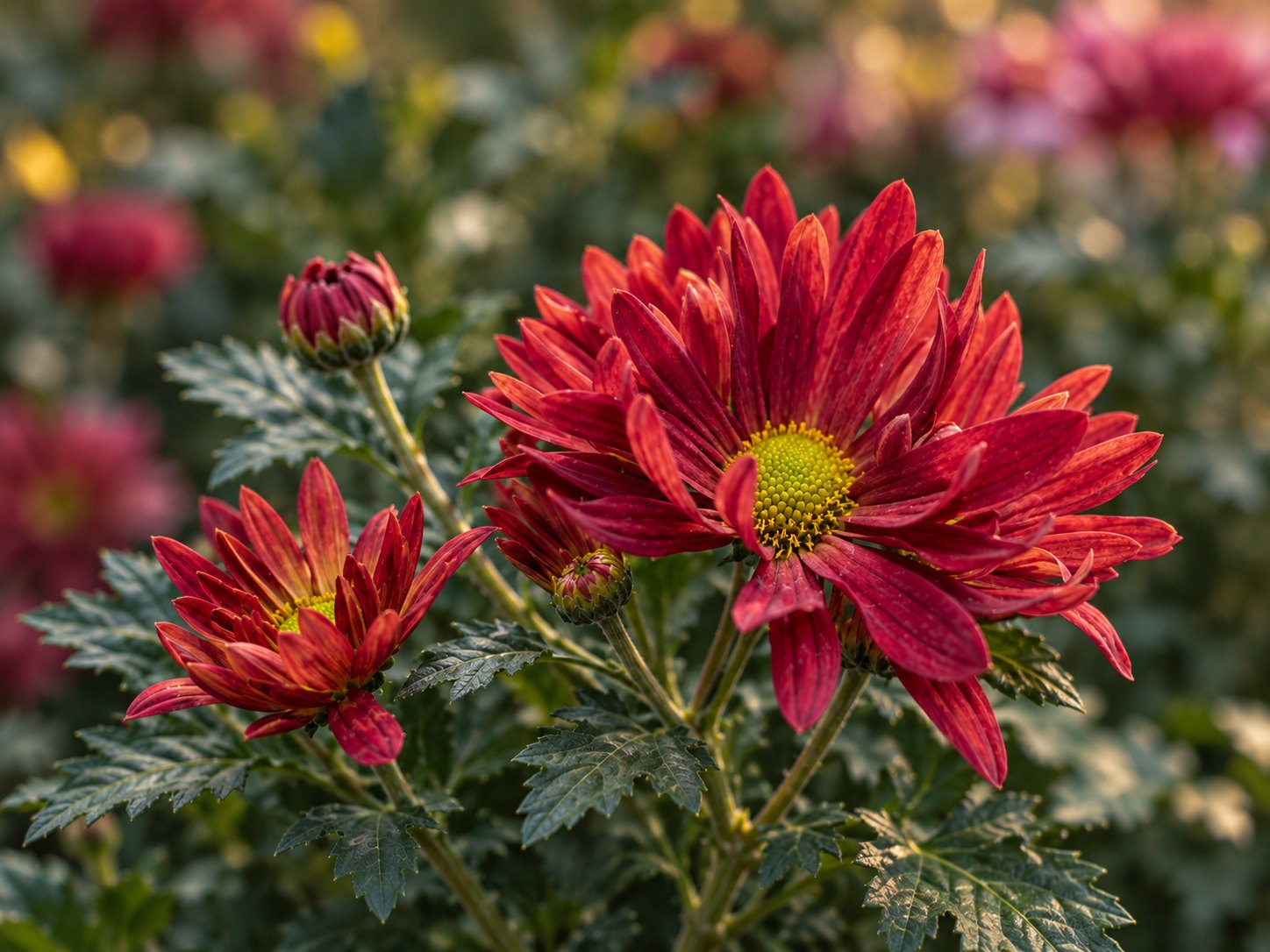
In Munich’s Botanical Garden, red chrysanthemums open beside tightly held buds. Autumn has more than one stage of life in view.
The season
菊花開 · Kiku no hana hiraku
Chrysanthemums open.
The fiftieth kō belongs to Kanro — Cold Dew. Its observation is direct: chrysanthemums come into flower. Within the deepening of autumn, the calendar makes room for an opening.
The phrase draws attention to a particular plant, and to a particular stage of its life. A bud still holds its shape. Beside it, petals spread around a visible centre. The change can be read at the scale of a single stem.
In Munich’s Botanical Garden, that observation found a local form. Among the many flowers that caught my eye, the red chrysanthemums brought the season into focus: open blooms, closed buds and leaves sharing the same small space.
October 13–17 · Kanro · Cold Dew
Field note · Munich Botanical Garden
Munich, Germany · Autumn 2026
I came to the Botanical Garden looking for chrysanthemums. There was plenty to stop for along the way.
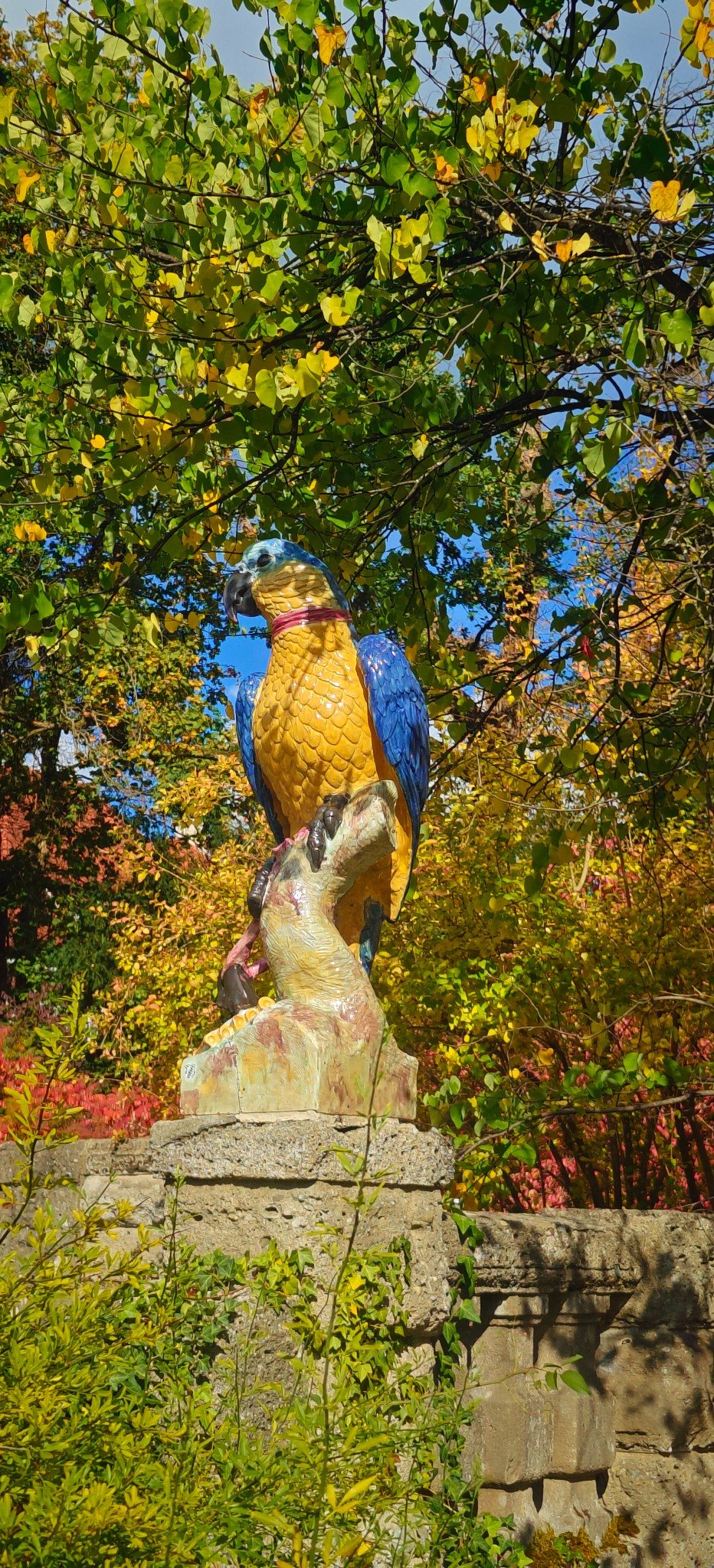
The garden was full of colour. Green leaves were beginning to carry yellow among them. A blue-and-yellow parrot sculpture stood above a stone base, its bright surface framed by branches and autumn foliage. Elsewhere, flowers drew the eye down into the beds.
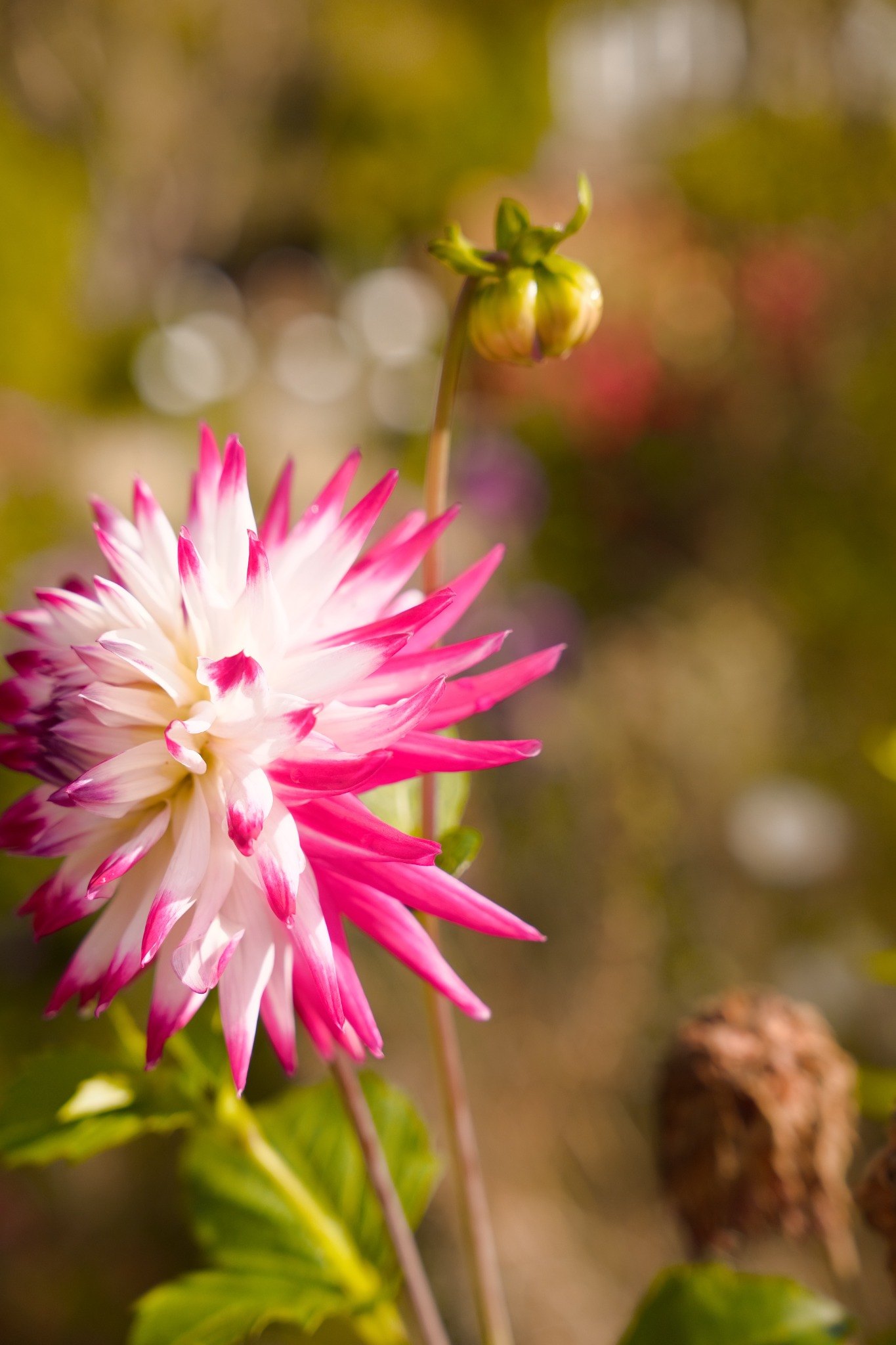
I photographed some of those discoveries before settling on the season’s main subject. One pink-and-white flower opened into long, pointed petals. Above it was a closed bud; lower down, a spent flower head remained on its stem. Several stages of the garden were visible together.
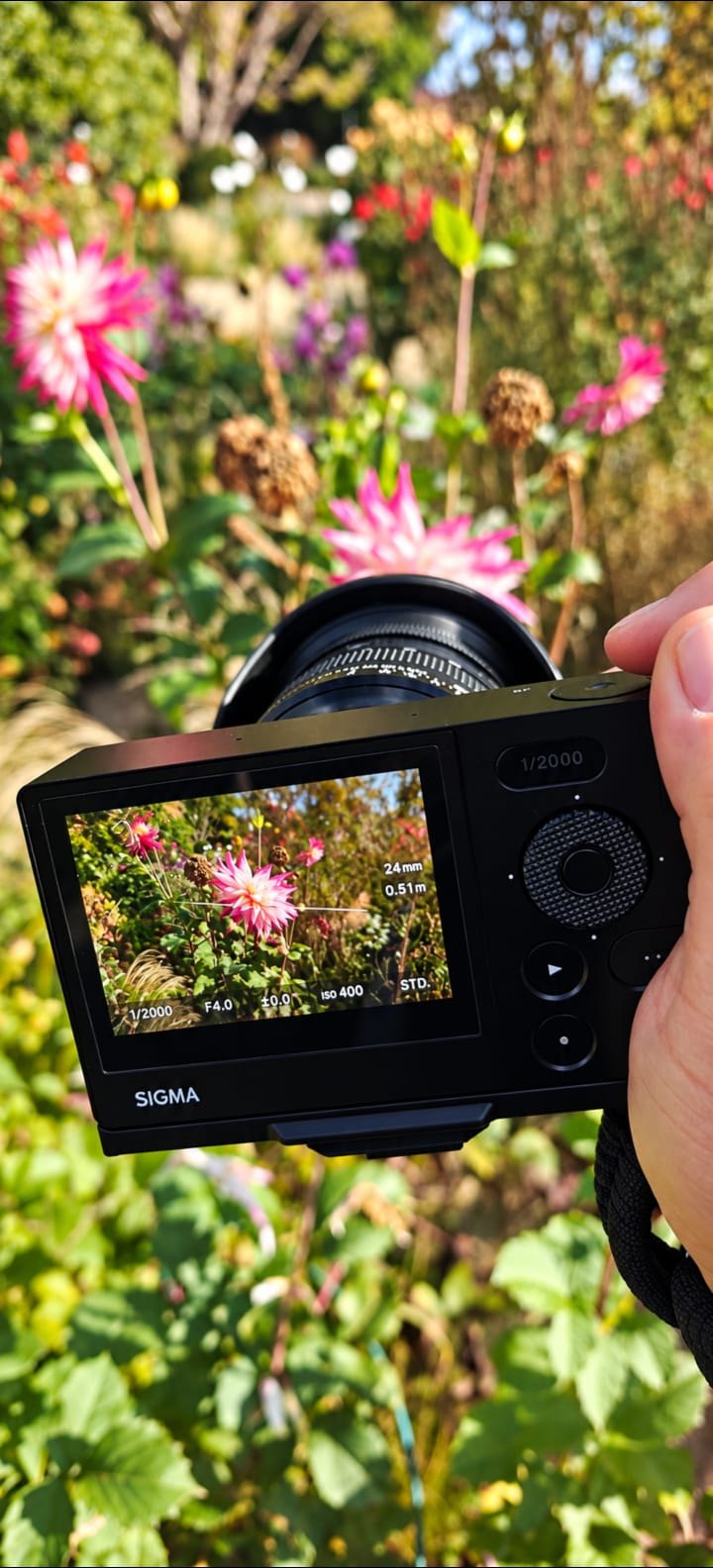
One of the field-trip frames shows the Sigma in my hand, with the flower on its screen and the planting beyond it. I like that small overlap: the garden continuing around the edges while the camera makes a frame within it.
Those other photographs belong to the visit too. They record what caught my attention while I was looking for something specific, and how much there was to see around the subject named by the calendar.
The red chrysanthemum became the final choice. Its largest bloom opens towards the camera, with a smaller flower beside it and buds still gathered tightly on their stems. Leaves and other flowers remain around them, giving the portrait its place in the garden.
What held my attention was the relationship between those forms. The open flower was immediately striking, but the buds gave it a sense of time. Looking at them together made the word “open” feel precise.
Colour in the garden
A bright parrot sculpture beneath turning leaves: one of the garden’s small encounters along the way.
A frame within the garden
The Sigma in hand, a flower on the screen, and the surrounding planting continuing beyond the frame.
Another opening
A pink-and-white flower, a closed bud and a spent head: different stages sharing the same view.
The photograph
The largest flower opens just to the right of centre.
Its petals move through deep red, burgundy and touches of orange. Some stand almost upright; others lean outwards or curl towards the foreground. Fine marks and uneven edges keep the flower individual. At its centre, yellow gathers around a small green disc.
A second, smaller bloom sits lower on the left. Above it, a closed bud holds its petals together. Another bud rests nearer the middle, where the stems cross beneath the main flower.
Those relationships give the portrait its shape. The eye moves from the open centre to the smaller bloom, then towards what has yet to unfold. The image contains several stages without having to leave the plant.
The leaves remain an important part of the frame. Their veins and cut edges carry a different texture from the petals. Behind them, the garden softens into patches of green, red and pale light, giving the main flower space while keeping it connected to its surroundings.
For this kō, the buds matter as much as the bloom. They make opening visible as a change, with something still held in reserve beside it.
Revisited
Autumn can become a very simple story if I let it.
Leaves change colour. Flowers fade. The year begins to close. These are familiar observations, and they can make it easy to arrive in a garden already knowing what I expect to see.
“Chrysanthemums open” interrupts that expectation. It gives the season a verb I might more readily associate with spring, and asks me to look for it here.
The Botanical Garden made that coexistence visible. Yellow appeared among green leaves. A bright flower shared a frame with a closed bud and a spent head. Each plant offered a slightly different account of the same visit.
I had come with one subject in mind, but the other photographs helped me understand what I was looking for. The camera screen held one flower while the rest of the bed continued beyond it. A sculpture caught the light beneath changing foliage. Attention moved between things that belonged to the place in very different ways.
When I settled on the red chrysanthemum, the surrounding buds became part of the reason. The flower was open; the plant had more to come. Both could be held in the same photograph.
That is what I want to carry forward from this kō. A season is large enough to contain several stages at once. Looking closely gives each of them room, even when one familiar story is easier to tell.
For 72 Seasons Revisited, the old phrase became a small correction to my expectations. I went into an autumn garden looking for a flower. I came away paying closer attention to what was still beginning.
A flower opens.
A bud holds its shape.
Autumn makes room for both.
50 / 72
Another seasonal observation joins the journey.
The year continues, one image at a time.
72 seasons. 72 photographs. One year. One edition.
Notice where you are
What is still opening where you are?
A bud beside a flower already in bloom.
Fresh colour among leaves beginning to turn.
A curled petal catching the light.
A seed head beside something still growing.
Several stages of a season within the same small patch.
Stay with one plant for a moment.
There may be more than one story of autumn in front of you.