#43 · Sep 8–12 · White Dew
White dew rests on grass
草露白
Kusa no tsuyu shiroshi · White dew rests on grass
The season
草露白 · Kusa no tsuyu shiroshi
White dew rests on grass.
The forty-third kō opens Hakuro — White Dew, one of the first unmistakable signs that late summer is beginning to loosen its hold.
The dew itself is not white.
It becomes visible when the night has cooled leaves and grasses enough for moisture to settle, and the low morning sun turns thousands of transparent droplets briefly silver.
For a few minutes, water writes itself across the landscape.
September 8–12 · Hakuro · White Dew
Field note · September 7, 2026
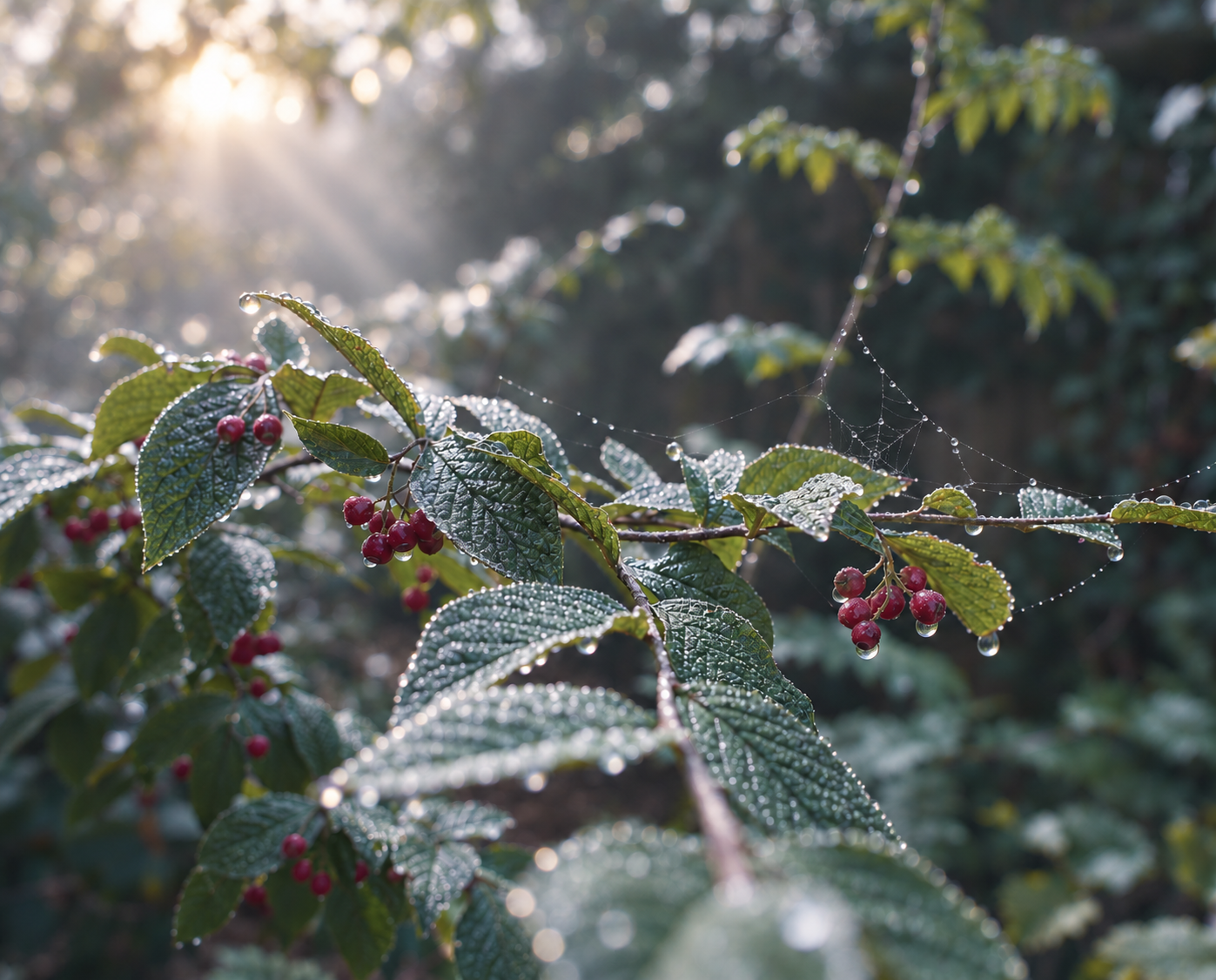
This morning, the change was already there.
The leaves were covered in fine beads of water. A few larger drops had gathered along their edges, and between the branches a spider’s web had collected the same moisture almost thread by thread.
Then the sun reached it.
What had been nearly invisible in the shade suddenly became the brightest part of the scene — droplets, threads and edges illuminated for only a short moment before the morning moved on.
Season 43 did not announce itself. It revealed itself.
Revisited
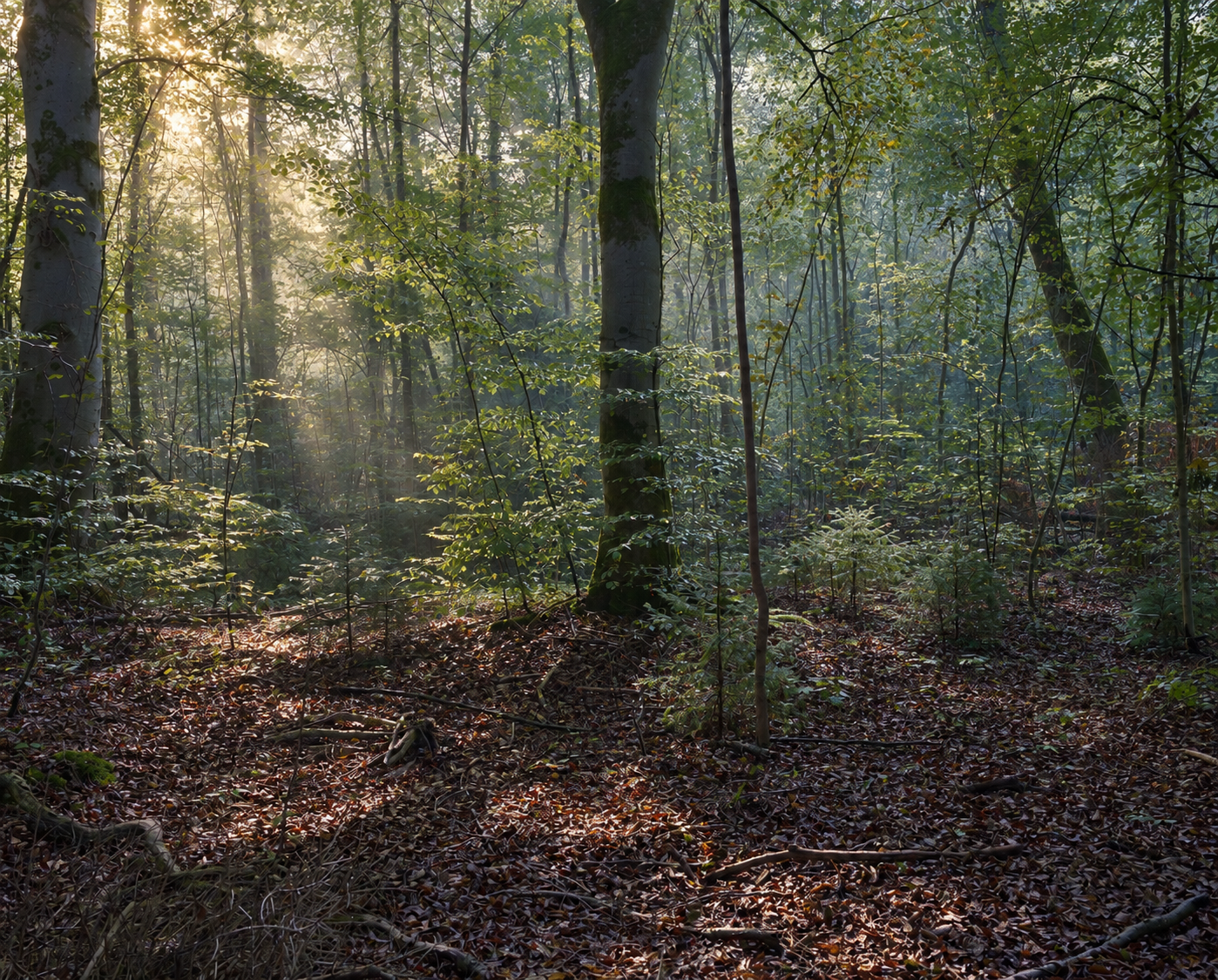
The Japanese kō speaks simply of dew appearing white on grass.
Here, there was no need to recreate that image literally.
The grass had become leaves. The open field had become a small tangle of branches, berries and spider silk. But the observation underneath it was remarkably precise: cooler nights had left a visible trace of themselves behind.
That is what 72 Seasons Revisited is beginning to teach me.
The old calendar does not tell me what to photograph.
It tells me what might be worth noticing.
And once you begin looking for the change, the landscape starts offering its own answer.
The subject changes. The act of noticing remains.
43 / 72
Two photographs made.
Seventy more observations still waiting.
72 seasons. 72 photographs. One year. One edition.
Notice where you are
What did the night leave behind this morning?
Dew on a leaf.
A web suddenly visible.
Cooler air against the skin.
A different angle of light.
The shift from one season to another rarely happens on a single day.
Sometimes it appears first as nothing more than a drop of water catching the sun.