#48 · Oct 3–7 · Autumn Equinox
Water leaves the fields
水始涸
Mizu hajimete karuru · Water leaves the fields
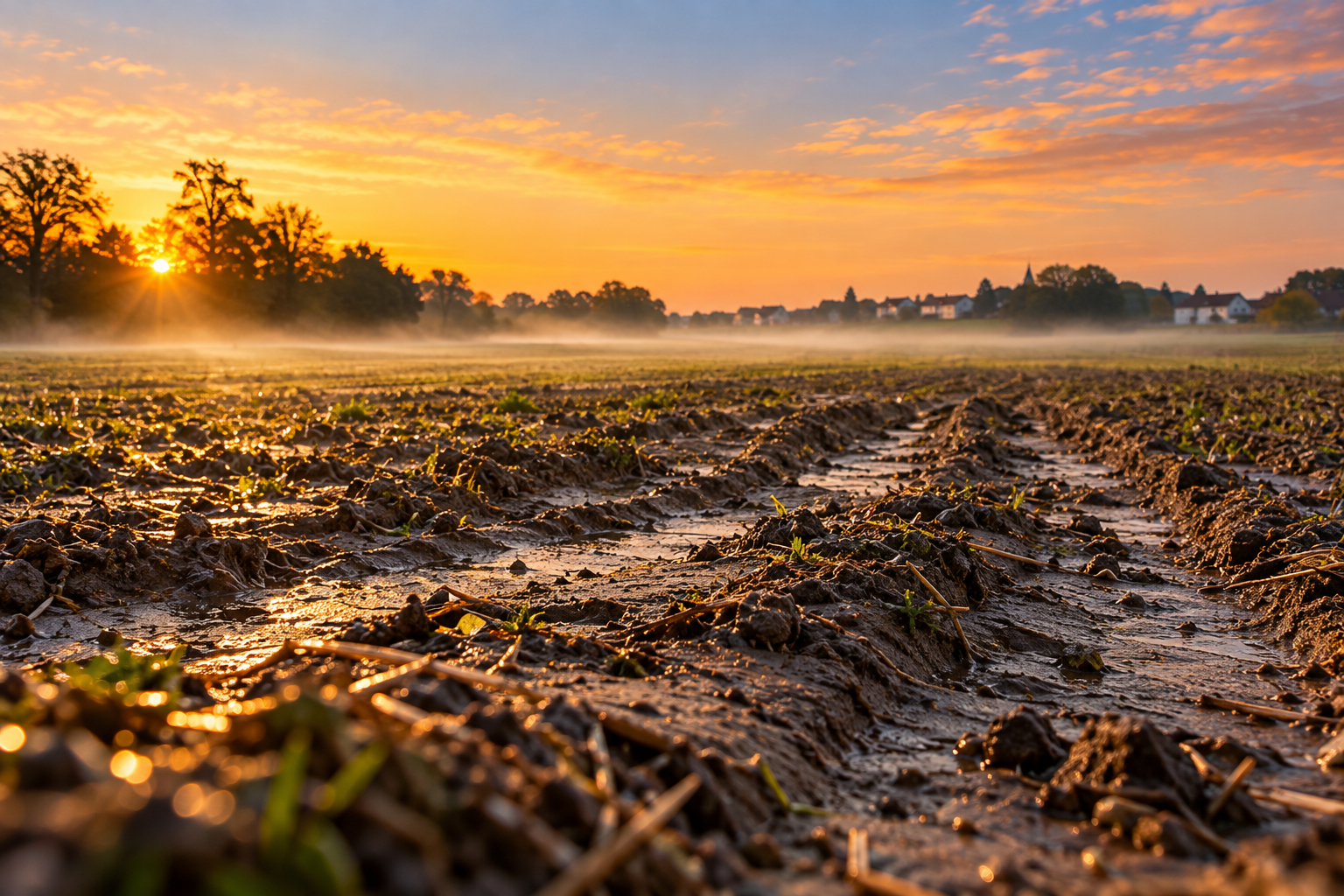
In the wet furrows of an autumn field, water catches the light and the earth begins to show its shape.
The season
水始涸 · Mizu hajimete karuru
Water leaves the fields.
The forty-eighth kō belongs to Shūbun — Autumn Equinox. It marks a change in the agricultural landscape: water begins to leave the rice fields, and the ground beneath it becomes visible again.
The observation is modest, but it changes the way a field can be read. Where water held a continuous surface, there are now edges, channels and exposed earth. The season becomes legible in the ground itself.
In Bavaria, the landscape offers a different response. There are no rice paddies in this photograph. There are furrows, wet soil and small pools of reflected sky — a meeting of water and earth that gives the old observation a local form.
October 3–7 · Shūbun · Autumn Equinox
Field note · Upper Bavaria
Upper Bavaria · Autumn 2026
The roadtrip belongs to this photograph too.
Seen from the car, the landscape opens into a broad field beneath a sky of orange and blue. A thin band of mist rests above the grass. In the wing mirror, the same light returns as a small reflection, with the camera briefly visible inside it.
Another frame holds a wider view of the countryside: green growth, a church tower and a line of poles crossing the field. These are ordinary details, but they place the season in a landscape people live and work in.
The final photograph brings the viewpoint much closer to the ground.
Here, the field is no longer a broad surface seen from the road. It becomes a succession of ridges and channels. Water lies between clumps of earth. Plant fragments catch the light. The distant buildings remain on the horizon, but most of the photograph belongs to what is directly in front of the lens.
That change of scale gives the season its shape. The sky supplies the colour; the furrows carry the observation.
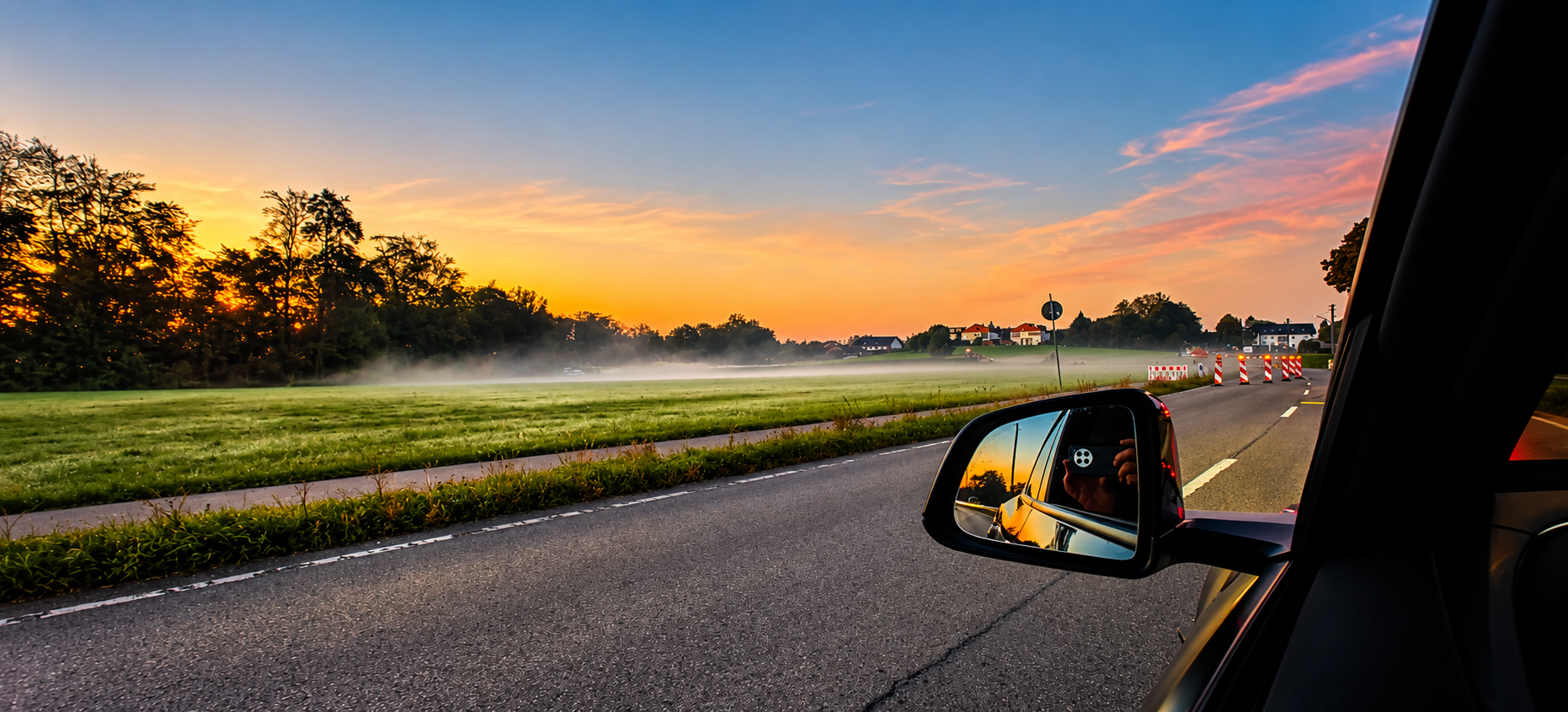
The way in
Low mist over the fields, warm light on the horizon, and a glimpse of the journey in the wing mirror.
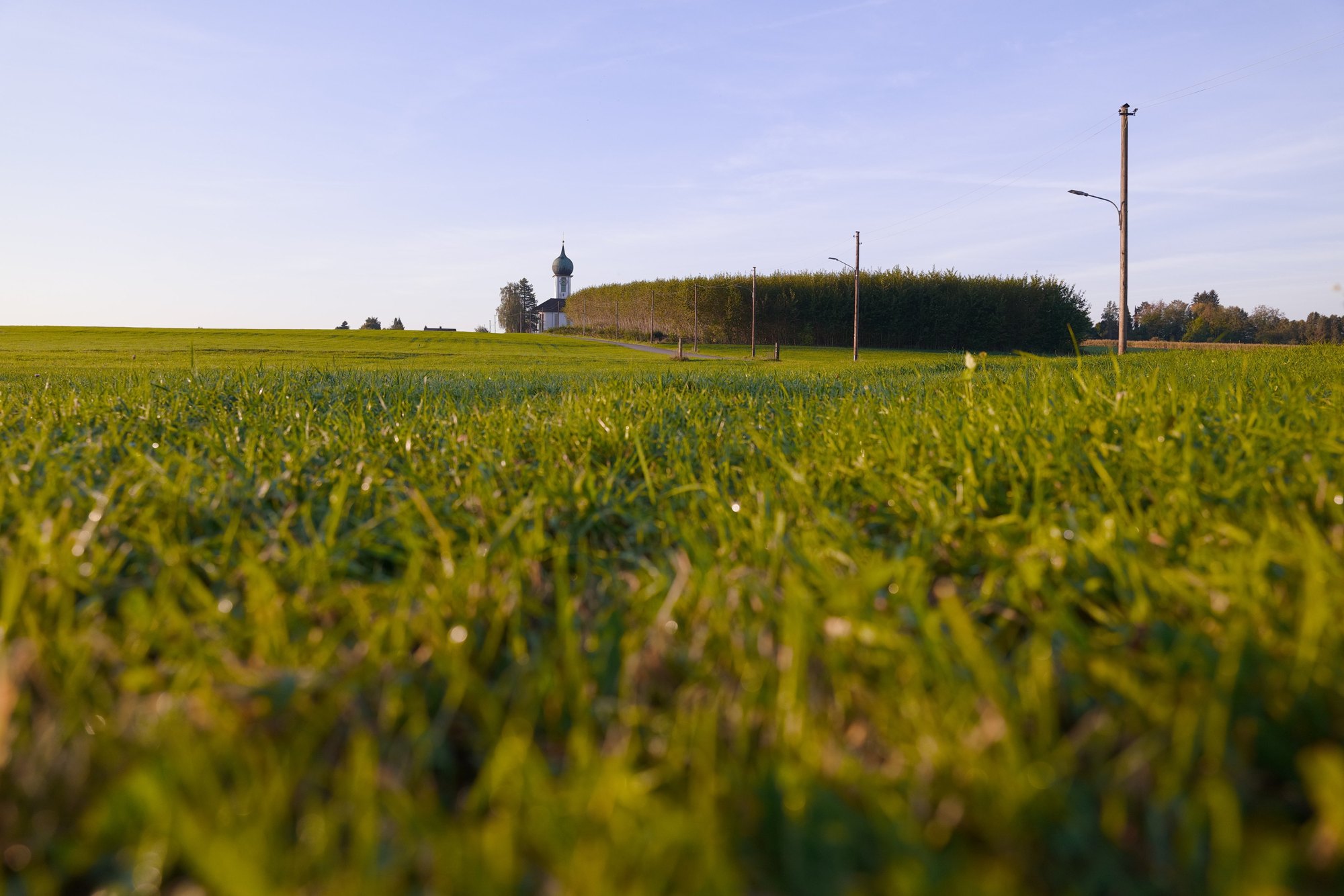
The wider landscape
A church tower, green fields and a line of poles: the countryside surrounding the closer study of water and earth.
The photograph
The furrows lead the eye into the field.
Between them, water holds fragments of the sky. Orange light runs across the wet surfaces, while the raised earth stays darker and heavier. A low band of mist separates the textured foreground from the distant houses and trees.
The photograph is built around that difference in scale: rough soil close enough to study, a village small on the horizon, and a sky opening above both.
The sun sits near the left edge. Its light reveals the uneven ground and gives the remaining water a brightness that makes it impossible to overlook.
Water has not vanished from this field. It is still present in the channels. For this kō, that matters: the photograph holds a threshold, where water and exposed earth can be seen together.
The seasonal response lies in their relationship — in the shapes that become visible when attention moves from the whole landscape to the ground beneath it.
Revisited
The traditional kō names a practical change: water begins to leave the fields.
Reading it from Bavaria, I cannot carry the entire agricultural context across unchanged. A Japanese rice field and this worked field belong to different landscapes, different crops and different routines. The connection has to be found through observation.
What the old phrase offers is a place to begin looking.
It directs attention downwards, towards the surface of the earth. Towards the way water settles into a channel, catches against a ridge or leaves a patch of soil exposed. Towards details that can disappear inside the larger impression of an autumn landscape.
The bright sky could easily become the whole story of this photograph. Its colour is immediate. The sun, the trees and the mist offer everything needed for a beautiful view.
But the season is also there in the foreground, where the field is untidy and full of texture. Broken stems lie across the soil. Water gathers between the furrows. Small plants remain among the clumps of earth. Looking closely gives those details their own weight.
That is the value of revisiting the kō here. It makes an ordinary field worth a second look, and it gives the photograph a question beyond the light: what becomes visible at the meeting of water and ground?
For 72 Seasons Revisited, the answer does not need to make Bavaria behave like Japan. It needs to preserve the attention that the original observation set in motion.
In this frame, water still reflects the sky. Around it, the earth has a shape of its own.
Water holds the light.
The furrows hold its shape.
Autumn is close to the ground.
48 / 72
Seven photographs made.
Sixty-five observations still ahead.
72 seasons. 72 photographs. One year. One edition.
Notice where you are
What becomes visible when water leaves the ground?
The edge of a puddle drawing back.
A shallow channel between rows of earth.
Mud holding the marks of leaves or footsteps.
A strip of sky reflected in a field.
The texture of ground you usually pass without looking.
Look down for a moment.
There may be a whole season in the space between two furrows.