#47 · Sep 28–Oct 2 · Autumn Equinox
Insects retreat below ground
蟄虫坏戸
Mushi kakurete to o fusagu · Insects retreat below ground
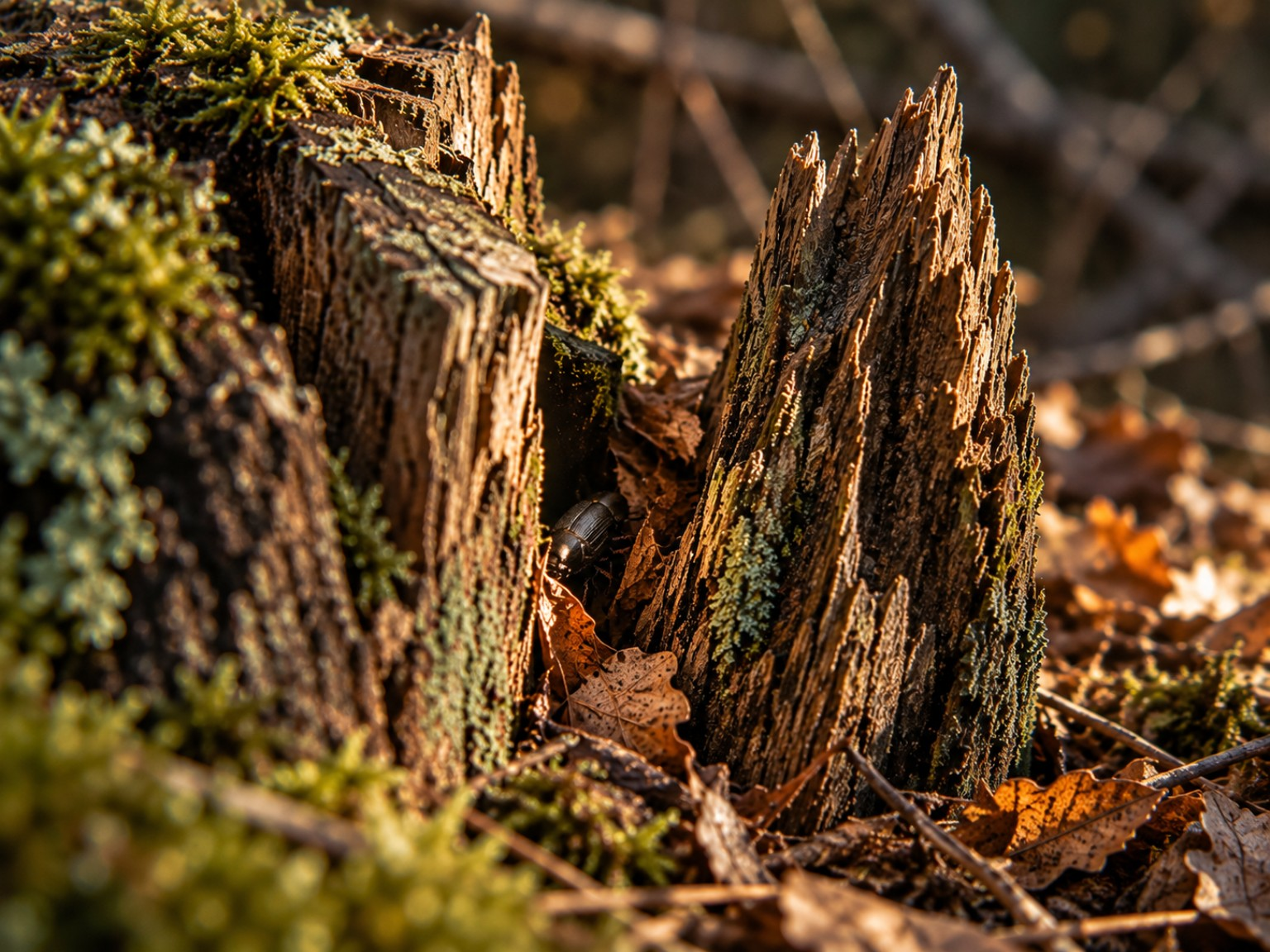
A search for insects became a study of where life disappears.
The season
蟄虫坏戸 · Mushi kakurete to o fusagu
Insects retreat below ground.
The forty-seventh kō belongs to Shūbun — Autumn Equinox, the point in the year when light and darkness briefly approach balance and the season begins turning decisively inward.
In the traditional Japanese calendar, this is the time when insects begin to disappear from view.
They retreat beneath leaves, into soil, under bark and among the cavities of dead wood. Summer’s small movements become harder to find.
Nothing appears to happen. That is precisely the change.
The landscape remains, but more and more of its life is moving somewhere beyond immediate sight.
September 28–October 2 · Shūbun · Autumn Equinox
Field note · Upper Bavaria
Forstenrieder Park · September 2026
I entered the forest looking for insects.
The afternoon still carried something of summer. Hard sunlight fell through a largely green canopy. Shadows crossed the road as I rode deeper into the woods.
At first, I was looking too widely.
The forest offered trees, clearings, fallen branches and old wood — but very little of the movement I had come to find.
So the search changed scale. From forest to tree. From tree to bark. From bark to moss, leaves, cracks and darkness.
Eventually, inside the remains of a broken tree, something moved.
A beetle had settled between splintered wood and fallen leaves, almost indistinguishable from the structure surrounding it.
The photograph was there. Not because the insect presented itself. Because it was already disappearing.
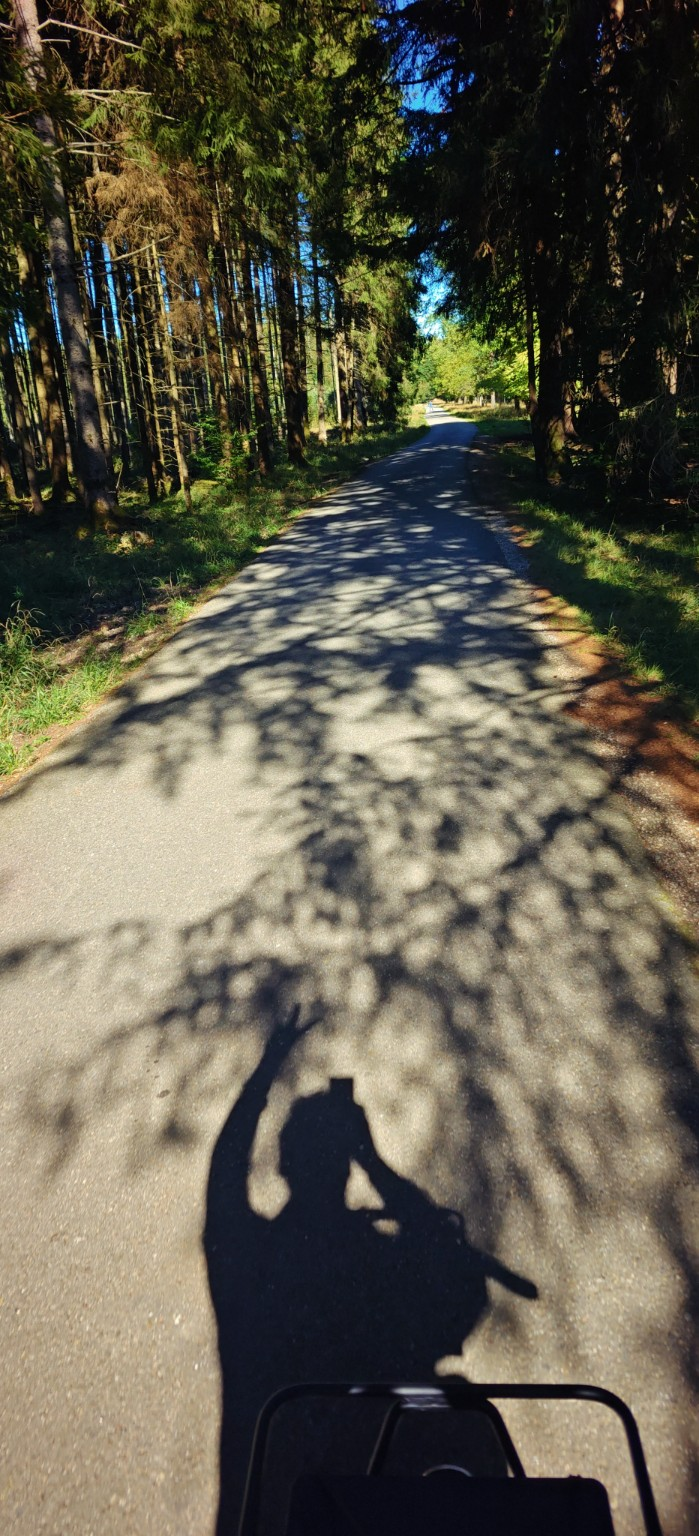
The way in
Late-summer light and long shadows on the road into Forstenrieder Park.
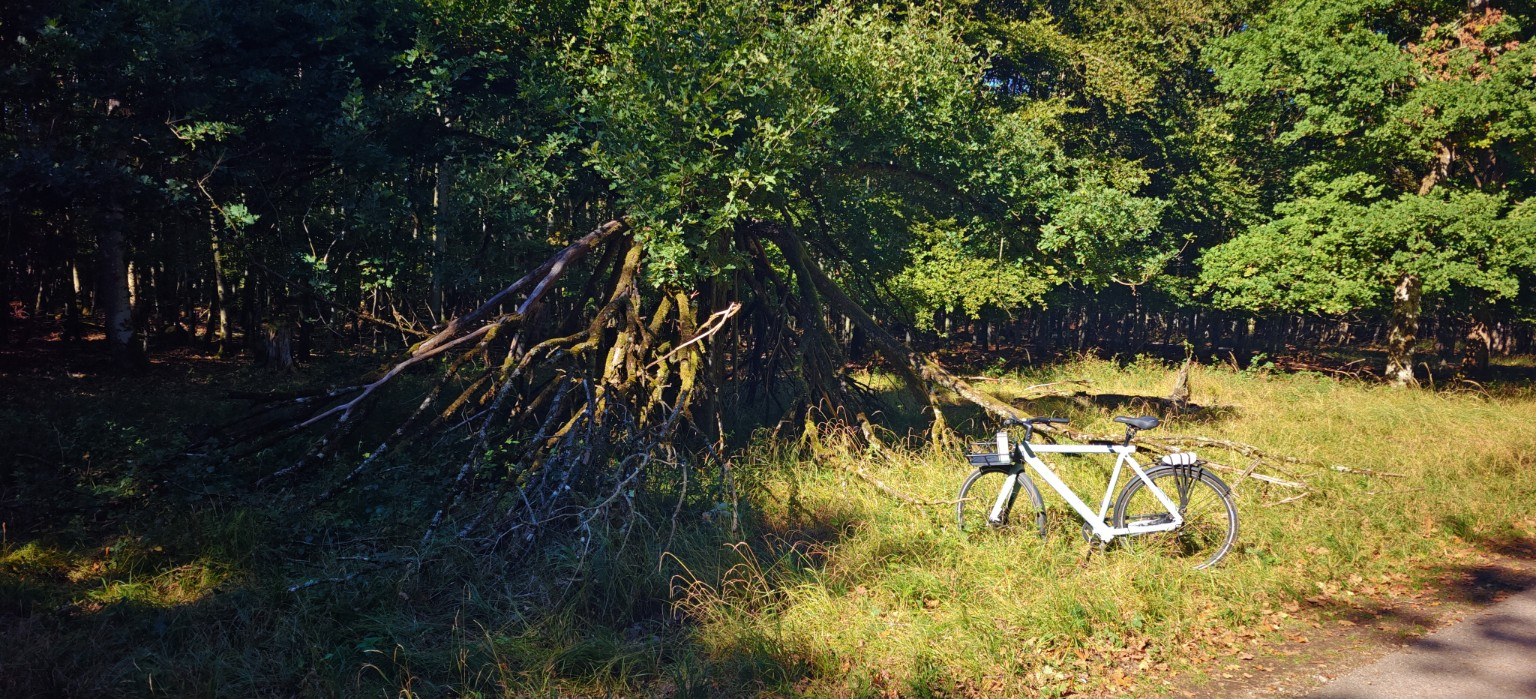
The search narrows
The forest offered no obvious subject. The search moved from landscape to habitat.
The photograph
At first, there is only wood.
Splintered surfaces. Moss. Lichen. Dry leaves caught between the remains of a tree.
Then the eye adjusts.
A beetle appears in the narrow darkness between them.
The final photograph does not isolate the insect from its surroundings. It allows it to remain almost concealed within the habitat it has chosen.
That became important.
The traditional kō is not simply about insects. It is about their withdrawal from the visible world.
The photograph therefore asks the viewer to repeat the experience of the search itself: to look once — and then look again.
Revisited
The original kō speaks of insects closing their doors.
It is an extraordinarily human image for an almost invisible biological transition: small lives withdrawing from the exposed world and finding shelter underneath it.
In Bavaria, there is no single moment when this happens. Nor is there one species that can stand for the entire transition.
What can be observed is the changing relationship between visibility and concealment.
The forest is still green. The sun can still feel warm. Yet beneath that familiar surface, autumn has already begun reorganising life.
That is what I found in Forstenrieder Park.
Not an illustration of a Japanese seasonal observation, but its local echo.
A beetle. A cavity in old wood. And a living thing becoming difficult to see.
This is what 72 Seasons Revisited is intended to preserve: not proof that two landscapes behave identically — but attention to what happens when an old observation teaches us where to look.
The forest does not become empty.
Life simply moves out of sight.
Autumn begins underneath.
47 / 72
Six photographs made.
Sixty-six observations still ahead.
72 seasons. 72 photographs. One year. One edition.
Notice where you are
What tells you that life is beginning to retreat?
An insect disappearing beneath a leaf.
A movement in the grass that suddenly stops.
The dark opening beneath a piece of bark.
A forest floor becoming quieter.
Something you only notice because you were looking for it.
Not everything seasonal arrives as spectacle.
Sometimes change is the moment something slips from view.