#51 · Oct 18–22 · Cold Dew
Crickets sing by the door
蟋蟀在戸
Kirigirisu to ni ari · Crickets sing by the door
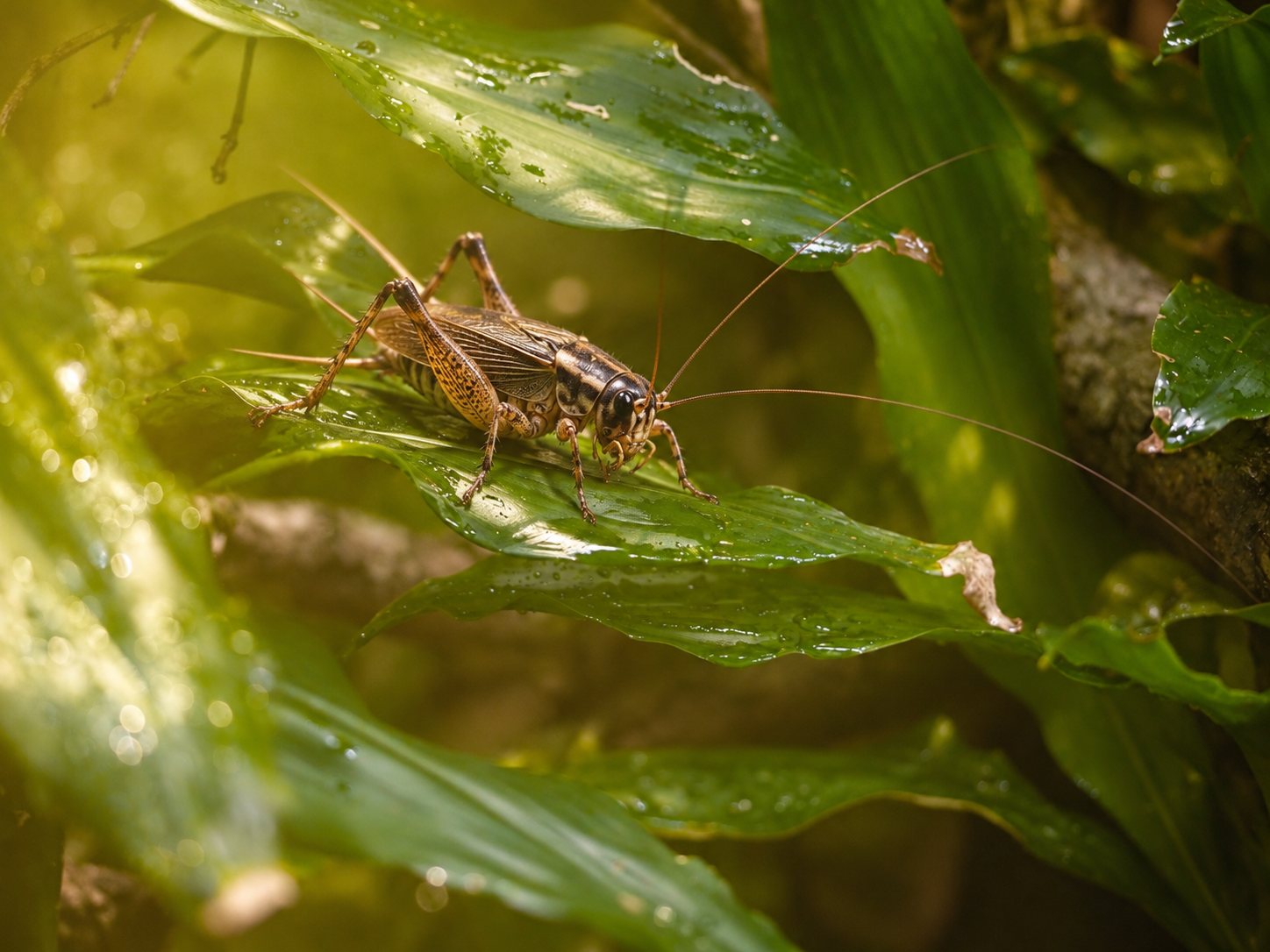
In Munich’s Tierpark Hellabrunn, a cricket rests among glossy green leaves. Far from the doorstep imagined by the Japanese calendar, a small encounter brings an ancient autumn observation into focus.
The season
蟋蟀在戸 · Kirigirisu to ni ari
Crickets sing by the door.
The fifty-first kō belongs to Kanro — Cold Dew. As autumn advances, the traditional Japanese calendar turns its attention towards a familiar sound: the singing of crickets near the entrances to human homes.
It is an observation about proximity. The natural world is no longer somewhere beyond the garden or across a distant landscape. It has come close enough to be heard from the doorway.
In Munich, finding that precise moment proved less straightforward. October was already changing the colours of the trees, but the small musician of the season remained elusive.
The search eventually led to Tierpark Hellabrunn and its large tortoise house. There, among broad green leaves, I found a cricket whose delicate form and extraordinary antennae offered a different interpretation of the same seasonal moment.
The setting had changed. The invitation to notice had not.
October 18–22 · Kanro · Cold Dew
Field note · Tierpark Hellabrunn
Munich, Germany · Autumn 2026
This week’s photographic journey took me to Tierpark Hellabrunn in Munich.
The search began outdoors, where the trees were already showing the first unmistakable signs of autumn. Sunlight filtered through green and yellow leaves, falling across the paths in irregular patches of gold.
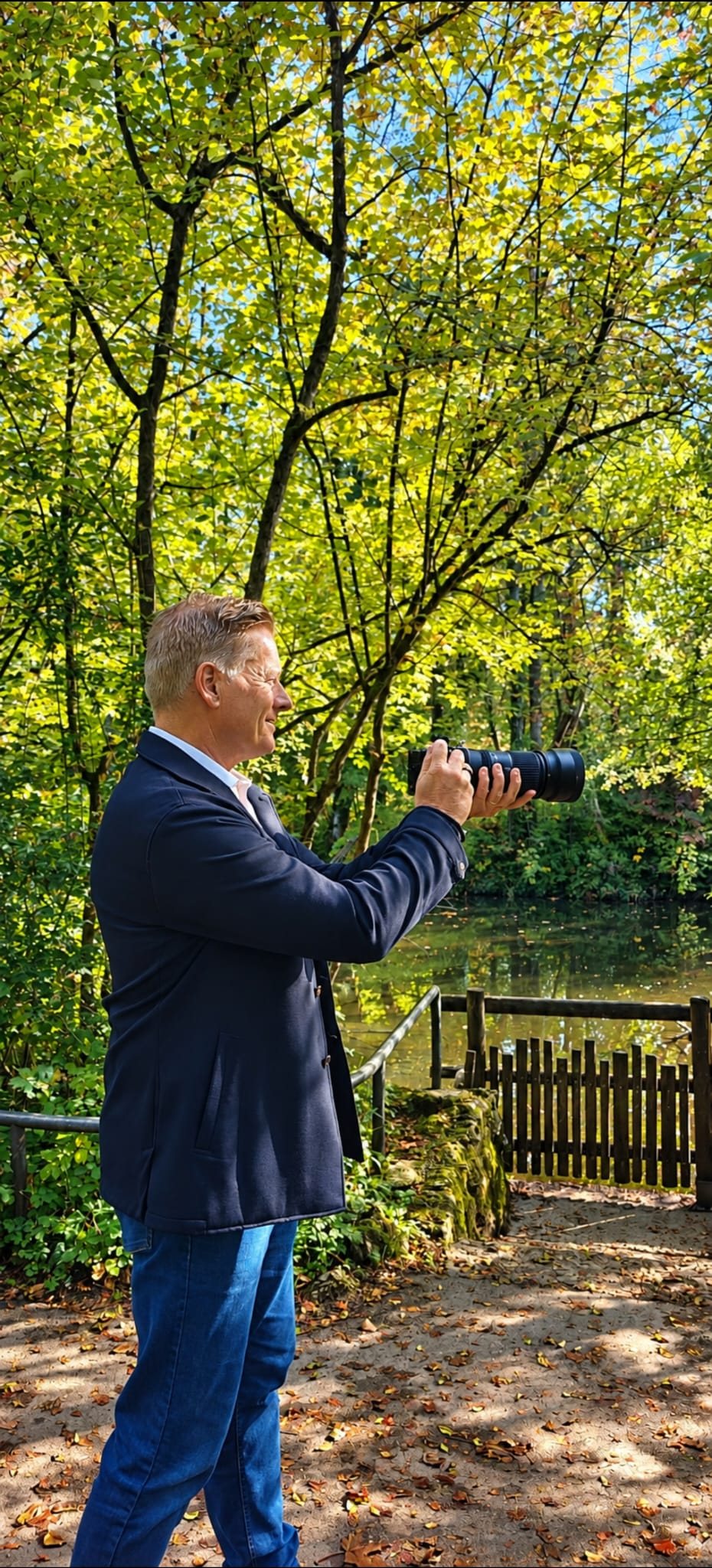
I had brought my Sigma camera and a long lens, hoping to find a subject small enough to be easily overlooked.
The zoo offered its own distractions along the way.
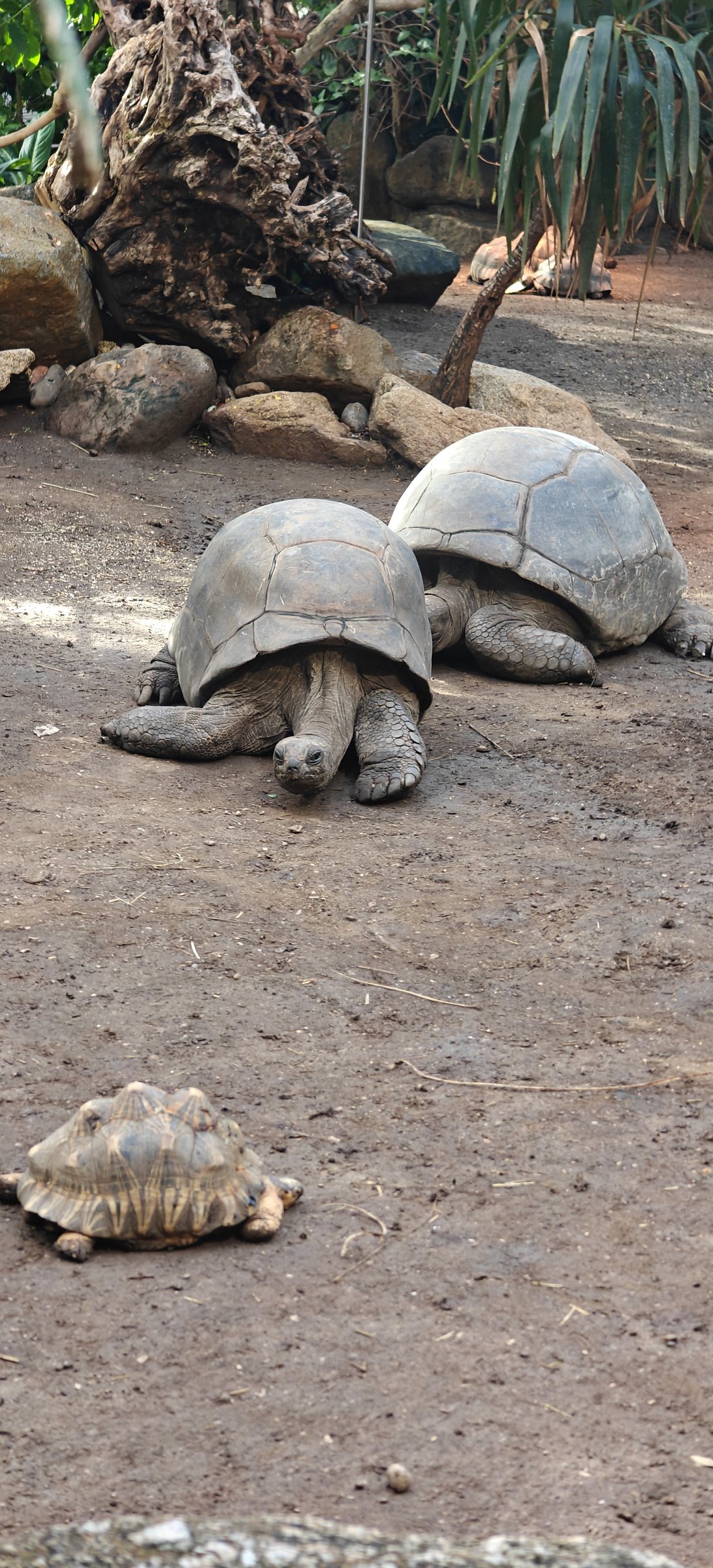
At the tortoise house, enormous shells, heavy feet and unhurried movements presented an entirely different scale of life. Two large tortoises rested close together, while a much smaller one occupied the foreground.
There was something quietly amusing about arriving in search of one of autumn’s smallest voices and first encountering animals that seemed to measure time at a completely different pace.
Eventually, the search became more focused.
Inside the large tortoise house, among the vegetation, a cricket rested on a broad green leaf.
Its body carried intricate patterns of brown, gold and black. Its antennae extended far beyond its head, tracing fine lines across the surrounding foliage.
For a moment, the busy surroundings disappeared. The photograph became about a single creature and the small world immediately around it.
That was the frame I had been looking for.

The search begins
A Sigma camera in hand, autumn sunlight on the woodland path, and another small expedition into the changing season.
Behind the lens
A moment from the photographic journey through Hellabrunn, surrounded by the greens and yellows of October.
A different sense of time
Inside the tortoise house, large and small tortoises share the same quiet space. An unexpected encounter on the way to a much smaller subject.
The photograph
The cricket rests diagonally across a broad green leaf, surrounded by overlapping layers of vegetation.
Its body is a small composition of remarkable precision.
Fine markings run across its folded wings. The hind legs form sharp geometric angles, while the head turns slightly towards the camera.
Most striking are the antennae.
They extend across the photograph as extraordinarily delicate lines, reaching beyond the insect’s immediate surroundings.
The light gives the scene its atmosphere.
Warm yellow-green tones enter from the left, while darker leaves and the textured background create depth around the subject. Small reflections on the foliage suggest a humid, sheltered environment.
The photograph is intimate without isolating the creature completely from its surroundings.
It remains part of a living, layered space.
There is no doorway in this image, and no visible evidence of singing. What the photograph captures is the creature itself: its presence, its extraordinary detail, and the attention required to notice it.
For this kō, that encounter became the essential observation.
Revisited
A seasonal calendar written centuries ago does not always translate literally into the landscape outside my door.
That is part of what makes this project interesting.
The Japanese observation places the cricket near the threshold of a home. It describes a moment when the changing season becomes audible within everyday life.
My own search took me somewhere quite different.
Through an autumn landscape, past sunlit paths and slow-moving tortoises, into the sheltered vegetation of a zoo.
Yet the experience returned me to the same underlying idea.
Attention changes scale.
A large landscape becomes a single leaf. A busy environment becomes one small creature. An almost invisible detail suddenly occupies the entire frame.
The camera helps me make that transition.
I began with a particular image in mind. What I found was not an exact reproduction of the traditional scene, but a personal encounter with its central subject.
Perhaps that is what revisiting these seventy-two seasons can mean.
Not reproducing a landscape from another time and place, but allowing an old observation to sharpen the way I see the world around me.
The cricket does not need to stand at my doorway to remind me that the season is changing.
Sometimes, noticing is enough.
A small creature rests.
The world grows quiet around it.
Autumn asks us to listen.
51 / 72
Another seasonal observation joins the journey.
The year continues, one image at a time.
72 seasons. 72 photographs. One year. One edition.
Notice where you are
What small signs of autumn are easy to overlook?
An insect resting beneath a leaf.
A faint sound from a garden after sunset.
Sunlight reaching through the last green branches.
A movement almost too small to notice.
A quiet corner of nature beside a familiar path.
Stay with one small detail for a moment.
Sometimes the smallest presence changes the way we experience an entire season.